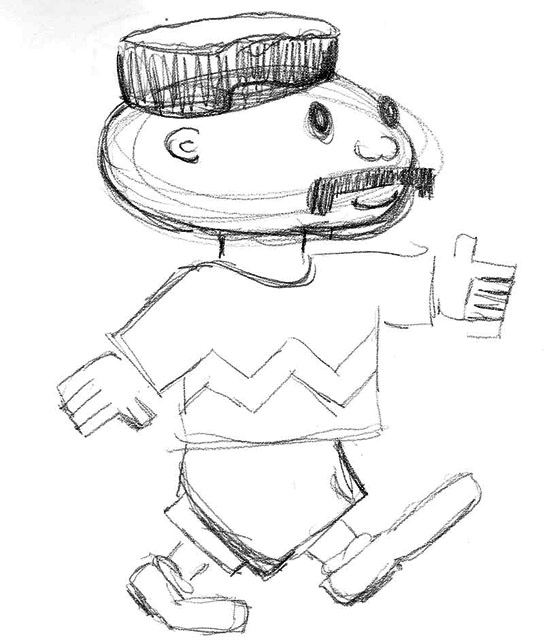
This week, December 14 – 21, marks the tenth anniversary of the completion and publishing of our first socially-conscious videogame, Crosser.
]]>On that date I was actually seven years old. I would turn 8 in late March of that year. My mom's diary notes that I was a reluctant reader until I found comic books. It's amazing that this story would have stuck with me so very deeply.
]]>http://nbclatino.com/2012/12/26/tech-leaders-rafael-fajardo-creating-socially-conscious-video-games/
Ernest Adams: Selling Hate and Humiliation
At that time I didn't anticipate just how nasty online games could become, and I certainly never dreamed that game designers would start encouraging that nastiness and selling people virtual goods that let them hurt each other in real, not virtual, ways. But that's what's starting to happen.
Free-to-play is a comparatively new business model for us. Free-to-play (F2P for short) means "sort of free." The game is free if you have a lot of time, but if you want to advance at anything other than a glacial pace, you have to put money in, and that enables you to get ahead faster. Paying money also gives you an advantage over those players who don't pay.Zhan Ye explained in his lecture that in F2P game design, every feature must be measured by two metrics: is it fun, and does it make money? The designer is no longer free to concentrate purely on creating a fun game; the designer must be a businessperson.
I ran this idea by Martha Sapeta, who's the lead designer on Sorority Life at Playdom, which makes F2P games. She told me that at Playdom, every game feature must drive one of three things:
Daily average users, which simply means "number of logins"
Re-engagement, which means number of people coming back to play again
Monetization, which means people paying money for advancement or other game features
This is a new way of thinking about game design for me. In RabbitJack's Casino, fun correlated directly with revenue. We could concentrate 100 percent on fun because that was what earned us money. Players paid for the game continuously; we didn't have to coax them to make additional expenditures.Then I moved on to EA, where we made games sold at retail. The designer of a retail game thinks about whether features will be popular or not, but he is free to take a holistic approach to it. He doesn't have to measure moneymaking potential feature-by-feature.
...
Avoiding hate doesn't mean we have to get rid of competition. A close, hard-fought game is a fun one. When the 49ers beat the Broncos in the closing seconds, I cheer. But that doesn't mean that I hate the Broncos or their fans. I don't have any ill-will towards the Broncos at all. If you watch American football players, they'll knock each other down with incredible violence... and then they'll help each other back up. There's no hate there so long as nobody is cheating. Boxers, fencers, and wrestlers don't hate their opponents. Hatred clouds judgment and inhibits peak performance.There's a social convention called sportsmanship that is designed to keep competition on the right side of the line. I realize that the concept of sportsmanship sounds like something out of the 19th century; perhaps it has no place in the tough, nasty world of online gaming. But when competition turns to hatred, you have gone too far. If you are building games that foster tribalism and hatred and cruelty, you are doing evil.
There is no such thing as artificial hatred. All hate is real. And we should not be selling it.
Amen.
meh,
play to the end,
play again,
tell a friend.
I crafted an original version of these for P4games.org, and my collaborator -- Scott Leuteneger, who merits a page here (mea culpa) -- gave them a lyrical quality, making them much better. That said, we both feel that they can be improved upon. "Meh" in particular requires unpacking for the non-technorati audiences.
]]>Progression:
DaDa
Duschamp
John Cage & Lamont Young
Fluxus
Nam Jun Paik
Wolf Vostell
Yoko Ono
George Vautier
George Maciunas
New Media Art (and in some cases design)
what would we read?
Jasia Riechardt, The Computer in Art
Leavitt, Artist and Computer
McLuhan?
Manovich?
Estera Milman, Fluxus: A Conceptual Country ?
Mark Tribe, New Media Art ?
Eric Raymond, The Cathedral and the Bazaar?
Laura Heon, Game Show ?
Alan Kay in If/Then Play?
Gyorgi Kepes?
Jorge Luis Borges, Labrynths ?
Bolter and Gromala, Windows and mirrors ?
Do we watch things?
Jean Luc Goddard, Alphaville ?
Chris Marker, La Jetté ?
Which works can we experience?
John Simon, Every Icon
Sol Lewitt...?
BIBLIOGRAPHY [tentative]
Milman, Estera ed. Fluxus: A Conceptual Country. Visible Language. Volume 26, number 1/2. 1992.
Bolter, Jay David and Gromala, Diane. Windows and Mirrors: Interaction Design, Digital Art, and the Myth of Transparency. MIT. 2003.
Lanham, Richard. The Electronic Word: Democracy, Technology, and the Arts. Chicago. 1993.
Druckery, Timothy ed. Ars Electronica: Facing the Future. MIT. 1999.
Ascott, Roy. "Is There Love in the Telematic Embrace?". 1990.
Paul, Christiane. Digital Art. Thames & Hudson. 2003.
Greene, Rachel. Internet Art. Thames & Hudson. 2004.
Lunenfeld, Peter. User: InfoTechnoDemo. MIT. 2005.
Holtzman, Steven. Digital Mosaics: The Aesthetics of Cyberspace. Touchstone. 1998.
Duguet, Anne-Marie. Smile Machines: Humor Art Technology. Transmediale. 2006.
Rothenberg, Jerome trans. pppppp kurt schwitters poems performance pieces proses plays poetics. Exact Change. Cambridge. 2002.
Grau, Oliver. Virtual Art: from illusion to immersion. MIT. 2003.
Wark, McKenzie. A Hacker Manifesto. Harvard. 2004
Lovink, Geert. Dark Fiber.
Greiman, April. Hybrid Imagery: The fusion of technology and graphic design. Watson-Guptill. 1990.
Rath, Alan. Plants Animals People Machines. Smart Art Press. 1995.
Rath, Alan. Robotics. Smart Art Press. 1998.
Koolhaas, Rem et al. Mutations.
Leavitt, R. Artist and Computer.
Reichardt, J. The Computer in Art. Van Nostrand Rinehold.
Tribe, Mark. New Media Art. Taschen. 2007.
Maeda, John. Creative Code.
----. Maeda @ Media.
----. Simplicity.
----. Design By Numbers.
Manovich, Lev. The Language of New Media. MIT.
Manovich, Lev. Softbook.
Toop, David. Ocean of Sound.
Youngblood, Gene. Expanded Cinema. [pdf Vasulka.org]
Lovejoy, Margot. Postmodern Currents: Art and Artists in the age of Electronic Media. Prentice Hall. 2nd Edition 1997.
Lunenfeld? Snap To Grid. MIT.
Laurel, Brenda. The Art of Human-Computer Interface Design.
Laurel, Brenda. Computers As Theatre. Addison-Wesley.
Laurel, Brenda. Design Research: Methods and Perspectives. MIT.
Laurel, Brenda. Utopian Entreprenuer. MIT.
Borges, Jorge Luis. Fictions.
===
There is more than one entry point. It is possible to draw a line from DaDa, through Duschamp, through Cage & LaMont Young, through Fluxus, to new media; but, it is not the only line. What are the antecedents to conceptual art? How do we account for the engineers with creative practices who did not have art historical references?
===
pre-rave scene?
cinechamber at UCSD, Naut Humon is his name. Mondo 2000 sensibility.
===
Lunenfeld, Peter ed. Media Work Pamphlet series. MIT
Helfand, Jessica. Screen: essays on design and new media. Princeton Architectural Press.
===
Vasari, framing mechanism(s) that led to, documented renaissance perspective. Hockney claims that there were secret lens based devices. Looking at the world through the screen (view[find]er) reiterates the privileged point of view of vaishing point(s) perspective.
Schjeldahl on Cezanne in New Yorker, 28 2011, p78. Using both eyes breaks the tyranny of perspective and gives birth to cubism.
===
entry points through the senses, in isolation... vs in aggregate...
vision, hearing, touch, smell and taste (to a lesser degree)
gestalt and gesamkunstwerk
cognition, cartesian and embodied
===
Antikythera Device. Babbage and Watt, Turing. How do we consider the pre-history of calculation, computation, and programming.
===
Curation is selection. I don't think it can be considered natural.
===
Watson & Crick, biology as code.
===
Saussure, natural language as code.
===
Derrida, perceptions of codes are unreliable, autodestructive.
===
McLuhan introduces the method of probes and aphorisms. These are metaphorical probes similar to Leonardo's and Einstein's thought experiments. Technologists who handcrafted electronics used physical probes to detect and measure pulsing signals. Biologists -- Leonardo among them -- used knives and probes (literally pointy sticks) to percieve and measure the nature of organs and organisms. Lunenfeld, Dunne, and Bleecker have self-consciously adopted/adapted probes to their methods.
===
Marie Curie, Philo Farnsworth (I think), Large Hadron Collider...
===
The commission and the speculation are economic models that artists have worked within for the last 1000 years.
===
Cinematic imaginings of nets and info shadows:
Eagle Eye
Enemy of the State
End of Violence
The Conversation
===
We need to engage in a meta-survey, a survey of surveys. We can and should diagram the overlaps and intersections among the surveys to create a visualization of the emergent canon(s), of what will be remebered and of what is likely to be forgotten.
===
Timetables of history, comparative visualization of strands in the tapestry of time. The Giloth essay offers us a forty-five year long strand. The book by the Eames Office for IBM, A Computer Perspective, offers a strand.
===
Deleuze & Guatari encourage us to adopt new(er) biological metaphors to organize knowledge production and understand networks. They offer us a contrast to the old(er) arboreal model. They validate breadth in the realm of depth.
===
Lunenfeld in Snap To Grid suggests that Art History itself will have to be recast. It is an interestingly Modernist statement, the sweeping away of history. At the same time he, and the other authors in the meta-survey, points out antecedents that compare, contrast, and validate. These are parallel works in other, recognized media forms. There is a list of narrative films, of paintings, of poems, of media artifacts all presented as if the wizened blind were -- with hands outstreched -- attempting to describe elephants of parable. [c.f. p 66]
===
Films continued...
Blade Runner
Johnny Mnemonic
Farenheit 451
A Scanner Darkly
===
Holtzman's Digital Mosaics, published in 1998, suffers from the passage of time even as it argues for a position that has been thought to be timeless in other contexts. Holtzman seeks the expressions and properties that are unique to the province of digital electronic computers and networks. He introduces the notion that these should be regarded as instruments more so than tools. He also invoke cinema, but for its failing to recognize early that a motion picture camera could itself be put into motion through a scene. With this invocation of _mis en scene_ he also invokes the theatical proscenium, the camera obscura, and the renaissance single point perspective. He reminds us of the screen as a framing device.
===
Swords and plowshares. Ballistic tables, Calculators.
===
Alternative or forking path (back to the comfortable realm of fiction):
Stephenson, Neal. Snow Crash. 1992. aprox 500 pages
Stephenson, Neal. Cryptonomicon. 1999. aprox 900 pages
Calvino, Italo. If On A Winter's Night A Traveler. 1979. aprox 250 pages
Bush, Vannevar. "As We May Think". The Atlantic Monthly. 1950s.
Borges, Jorge Luis. Labrynths. New Directions Books. 2007. aprox 250 pages
------. "The Garden of Forking Paths" pages 19-29
------. "The Library of Babel" pages 51-58
------."Partial Magic in the Quixote" pages 193-196
------."On the exactitude of science" from another collection.
Eco, Umberto. The Name Of the Rose.
Burton, Sir Richard trans. 1001 Nights.
More films:
Nolan, Christopher. Memento
Nolan, Christopher. Inception
Lynch, David. Mulholland Drive
Noe, Gaspar. Irreversible.
Carruth, Shane. Primer.
]]>
[February 10, 2011]
Video game depicts violence in Mexico
Feb 10, 2011 (El Paso Times - McClatchy-Tribune Information Services via COMTEX) -- Two new video games featuring immigrant smuggling and violence in Juarez will debut later this year.One is the "Call of Juarez: The Cartel," developed by Ubisoft Entertainment and Techland, which will be out this summer.
The second one by Boston-based Owlchemy Labs, "Smuggle Truck: Operation Immigration," rewards safe-smuggling drivers in the game with a "green card." It will be available in March as an application for iPad and iPhone.
"These games -- making tragedy and human consequences invisible -- provide fun and adventure. I can only imagine, with sadness, the stereotypes that are reinforced, especially among non-border people," said Kathleen Staudt, political science professor at the University of Texas at El Paso and the author of several books on Juarez and the border.
Ubisoft's announcement describes its "Call of Juarez" game as a first-person shooter game bringing the Old West into the present day.
"You'll embark on a bloody road trip from Los Angeles to Juarez, Mexico, immersing yourself in a gritty plot with interesting characters and a wide variety of game play options," it states. "Take justice into your own hands in this modern Western shooter." The game will be available for PCs and consoles and can be played by more than one person.
Four years ago, Ubisoft, with offices in San Francisco, released "Ghost Recon: Advanced Warfighter," a video game inspired by best-selling author Tom Clancy and criticized by Mexican officials. It depicted U.S. military attacks against targets in Juarez.
According to an Owlchemy Labs news release, " 'Smuggle Truck' was inspired by the frustration our friends have experienced in trying to immigrate to the United States.
"With such a troublesome issue being largely avoided in popular media, especially video games, we felt the best way to criticize it was with an interactive satire." The object of the game is to drive a truck carrying apparent undocumented immigrants safely across a fictional border in a desert.
Company officials said they were careful to avoid depicting stereotypes and specific locales as they created the game.
"With a satirical angle on a real issue, we want to create a game that is fun to play but also stirs up discussion on ways to improve the problematic immigration system in the United States," officials said in a news release.
A salesperson at Best Buy on the West Side said a couple of people have already asked about "The Call of Juarez." Ian Roberts, a manager at GameStop on the East Side, said the suggested retail price for "Call of Juarez" is $59.99. It could be at the store by July. "We still have a couple of the 'Ghost Recon: Advanced Warfighter 2' games, and they sell for $19.93 each," Roberts said.
Diana Washington Valdez may be reached at dvaldez@elpasotimes.com; 546-6140.
To see more of the El Paso Times, or to subscribe to the newspaper, go to http://www.elpasotimes.com. Copyright (c) 2011, El Paso Times, Texas Distributed by McClatchy-Tribune Information Services. For more information about the content services offered by McClatchy-Tribune Information Services (MCT), visit www.mctinfoservices.com.
We are again hosting a Colorado node of the Global Game Jam 2011 at the University of Denver. The event runs from January 28-30, 2011. Registration is free and is now open. We'll be open the full 48 hours. We'd love to see you all!
Global Game Jam is a 48 hour game-development and local community
building event of international proportions. It emphasizes
collaboration, cooperation, and thinking on your feet.
Registration details are available at:
http://globalgamejam.org/sites/2011/university-denver
In order to participate, you will need to register (create an account) at:
http://globalgamejam.org
and associate your profile with our location
There are 120 locations across the planet as of this mailing!
Once the theme has been announced, there will be a brainstorming time and a pitch-making opportunity. Teams will be built organically. It will be an excellent opportunity to experiment, to sharpen chops, to strut some stuff. This year we will support the creation of both videogames and paper-based games (think board games)!
Some more detailed information after the signature
paz,
Rafael Fajardo, Associate Professor
eMAD, DMS, and GAME programs
University of Denver
http://www.rafaelfajardo.com/
http://www.sudor.net/
http://www.p4games.org/
http://taketurns.pbwiki.com/
We'll begin on friday with a screening of the keynote address at 5:00pm, then an announcing of this year's theme. Brainstorming, pitchmaking and team-forming follow. We recommend keeping team size between 2-5 people. Bring a sleeping bag so you can catch some zzzs.
The local instance of the Global Game Jam will begin at 5:00 pm and
run through sunday at 7:00 pm.
What:
Global Game Jam 2011
at the University of Denver
in collaboration with
Colorado Game Developers Association
Global Game Jam is a 48 hour game-development and local community
building event of international proportions. It emphasizes
collaboration, cooperation, and thinking on your feet.
When:
January 28, 29, 30
begins 5:00pm on January 28 and ends aproximately at 5:00pm January 30
Who:
University of Denver
Contact Name: Rafael Fajardo
Contact: rfajardo [at] du (dot) edu
Where:
University of Denver
Shwayder Art Building
2121 E Asbury Ave
Denver, CO 80208
How: (Jam logistics)
To register, create an account at http://www.globalgamejam.org/ and
associate your profile with the University of Denver site.
Entrace Fee: 0.00
openlocation: Open location
48hours: Open for entire 48 hours
Internet Access: Internet access available
food: Have access to coffee/beverages and food in close vicinity
Notes:
This site is set up in collaboration
with the Colorado Game Developers Association
http://www.coloradogamedev.org/
We will have access to a lab and a classroom with room
for another twenty people who would bring their own laptops (or other gear).
We have access to the following development tools for the purposes
of Global Game Jam 2010: adobe suite (inl. Flash) + processing, please let me know if you need other or plan on bringing your own. I will do my best to accomodate.
###
This week, December 14 – 21, marks the tenth anniversary of the completion and publishing of our first socially-conscious videogame, Crosser.
]]>Today is Juan Valdez's fiftieth birthday. His anniversary is being celebrated by the President of the Republic of Colombia, and by the Colombian Federation of Coffee Growers. El Espectador, one of Colombia's leading newspapers, has assembled the montage presented above, and is streaming the ceremonies live from the home page of its website. I've attempted to link to the livestream below.
]]>As I have been gathering other resources to prepare for this season, I've found pointers to projects that are trying to share access to futbol — and to the ball in particular — with those who may not have the means. I neglect to point to the photography project that documents home-made balls in Africa, and the project that documents exuberantly created pitches with arial photos. These can be found with very little effort.
I'll leave a comparison also to the debate on Design Observer about "design imperialism":
these have been very important for visual and experiential perception for a century. They rely on a foundation of contrast or distinction between "figure" and "ground", presence and absence, sound and silence. I have taken this contrast to be meaningful or "meaning bearing" and so relate it to principals of semiotics. When these are taught from an arts heritage, they are often exercises with minimal forms, "primitives" – e.g. square, triangle, circle, only black, only white. The principles and properties are interpreted as tension, proportion, balance, depth (scalar), depth (overlapping or occlusion), depth (color in hue, lightness and saturation model), transparency (interpenetration of 2D forms), depth (variety of linear perspective strategies), movement, rhythm, pattern and texture (these last three through repitition of form). Historically these principles have been presented to eighteen year-old art students at the outset of their studies. I mentioned to Josh Fishburn that they are typically too abstractly presented for that learning cohort. It seems to take a great deal of preparation and reaffirmation to come to fully understand the Gestalt Analysis. Maybe that is why they have been presented at the beginning and reinforced throughout the processes. The educational method I outline in scheme above was taken from Gyorgy Kepes' Language of Vision. Kepes book is highly influential, and was itself informed by his work with Lazlo Moholy Nagy, who taught at the Bauhaus, and later at the Illinois Institute of Technology. Kepes taught at MIT after WWII. Kepes intersected with Nicholas Negroponte, Muriel Cooper, Seymour Papert, Marvin Minsky, and a host of others during his distinguished career at MIT.
Erica Liszewski has noted that Computer Science also has adopted some elements of Gestalt Theory. It would be interesting to see if this traces back to Kepes. Thanks go to Erica for the following summary taken from wikipedia (caveat emptor):
Kepes. Language of Vision. 1944 (original). On Google Books.

I mentioned last week in our game salon that I feel farmed out. I have been playing seven different farm themed games on the iPad and in Facebook.
I also mentioned -- this week -- that every coffee plot in my Farmville game was harvested by hand. I didn’t make use of the virtual machinery that would speed up my farming. Mechanized harvesting is an offense against Juan Valdez, an aesthetic I hold dear. This brought on amused comments of “cyber-Thoreau” and “crazy luddite”.
The social aspect of these farm games, cow-clickers as Ian Bogost calls them, reminds me very much of cross-stitching or embroidery. I make great effort to create pleasing visual patterns. I’m encouraged to do so by prompts in the game and in the chrome -- the interface, so that others might find my farm attractive, and visit more often. This is a layer in addition to the mutual obligation relationship of the gift-economies (written about in great detail by "Afeeld").
I have envisioned a conceptual and actual performance work, where I play -- Farmville specifically -- as many different characters with the surname “Campesino”. The Campesino extended family would have the given names “Primero,” “Segundo,” “Tercero,” etc.... There could be geographically specific cousins with surnames like “Paisa,” “Opita,” or “Guajiro”. These Campesinos would work my farm in Farmville, “by hand”, and I would level up. They would each have a small, basic plot “neighboring” mine.
Earlier coverage by Bruce Sterling and "Afeeld"]]>